How to Crochet for Beginners: Your First Four Stitches
Hold the hook, make a slip knot, chain, and work your first rows of single and double crochet — a complete first lesson with the fixes for every beginner wobble.
Pattern at a glance
US terms- Skill level
- Beginner
- Yarn
- Worsted (#4), one 50 g ball
- Hook
- 5 mm (H-8)
- Time
- About 30 minutes
- Finished size
- A 6 in (15 cm) practice swatch
You'll need
- Worsted weight (#4) yarn in a light, smooth colour — about 50 g
- 5 mm (H-8) crochet hook
- Scissors and a tapestry needle
In this post
- What to buy first
- US crochet terms
- Your first lesson, step by step
- 1. Holding the hook and yarn
- 2. The slip knot
- 3. The chain (ch)
- 4. Single crochet (sc)
- 5. Half double and double crochet
- Fixing the three things that go wrong
- Why does my work keep getting narrower?
- Why are my edges curling?
- Why is there a hole at the end of my rows?
- What to make first
- Common questions
- How long does it take to learn to crochet?
- Is crochet easier than knitting?
- Can I crochet left-handed?
- How much yarn do I need to start?
Crochet is four movements repeated in different orders. Once your hands know them, every pattern on this site — a little ghost, a granny square tote, a blanket — becomes a set of instructions you can simply follow.
This lesson takes about half an hour. By the end you'll have made a slip knot, a chain, and rows of single, half double and double crochet, and you'll know why your edges curl and how to stop them.
What to buy first
Two things, and neither is expensive:
- Worsted weight (#4) yarn in a light, solid colour. Light colours let you see your stitches; dark navy and black hide them. Smooth acrylic or cotton is far easier than fluffy or textured yarn.
- A 5 mm (H-8) hook. It's the size most worsted yarn labels suggest and it's comfortable in most hands.
Don't start with a kit of tiny hooks. Small hooks and thin yarn make slow, cramped stitches that are hard to see. Go bigger while you learn — you can always size down later.
US crochet terms
Every pattern on YarnBloom uses US terms, which is the standard in American patterns. UK patterns use the same words for different stitches, so always check which a pattern uses before you start — our guide to reading a crochet pattern has the full conversion.
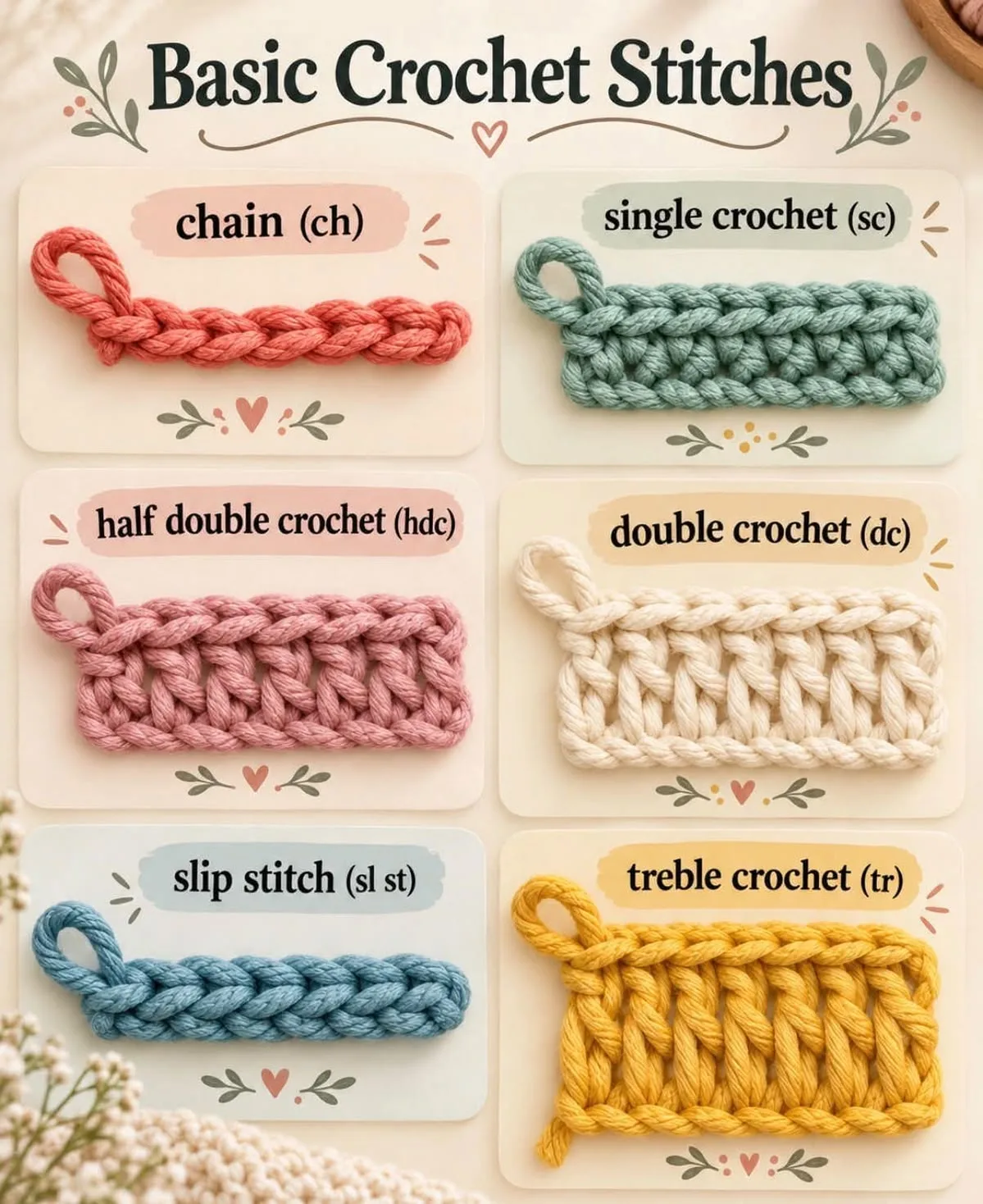
- ch – chain
- sl st – slip stitch
- sc – single crochet
- hdc – half double crochet
- dc – double crochet
- yo – yarn over (wrap the yarn over the hook)
The rest of this post is just below — free, as always.
Your first lesson, step by step
1. Holding the hook and yarn
Hold the hook like a pencil or like a knife — both are correct, and most people settle on one within a day. The hand that isn't holding the hook controls the tension: loop the working yarn over your index finger and let it run through your fingers so it feeds smoothly without going slack.
If your hand cramps, you are gripping too hard. Loosen everything; crochet should be almost lazy.
2. The slip knot
- Step 1: Make a loop about 4 in (10 cm) from the yarn end, crossing the tail over the working yarn.
- Step 2: Reach through the loop and pull the working yarn through it, making a second loop.
- Step 3: Slide that loop onto your hook and pull the tail gently. Snug, not tight — the loop should still slide along the hook.
3. The chain (ch)
The chain is the foundation most projects start from.
- Step 1: With the slip knot on the hook, yarn over.
- Step 2: Pull that yarn through the loop on the hook. (1 chain made)
- Step 3: Repeat until you have 21 chains. Count the V shapes along the front — the loop on the hook never counts.
Aim for chains all the same size. If they tighten up, chain with the hook held a fraction further from the tip.
4. Single crochet (sc)
The shortest, densest stitch — the one amigurumi is built from.
- Row 1: Insert the hook into the second chain from the hook, under the top two strands.
- Step 2: Yarn over and pull up a loop. (2 loops on the hook)
- Step 3: Yarn over and pull through both loops. (1 sc made)
- Step 4: Work one sc into each remaining chain. (20 sc)
- Rows 2–5: Ch 1, turn, and sc into each stitch across. (20)
That turning chain-1 does not count as a stitch — work your first sc into the very first stitch of the row, not the one beside it. Skipping it is the single most common reason rows shrink.
5. Half double and double crochet
Both start with a yarn over before the hook goes in, which makes them taller and faster.
- hdc: Yarn over, insert the hook, yarn over and pull up a loop (3 loops), then yarn over and pull through all 3.
- dc: Yarn over, insert the hook, yarn over and pull up a loop (3 loops), yarn over and pull through 2 (2 loops), yarn over and pull through the last 2.
- Practice rows: Ch 2, turn, hdc across (20). Then ch 3, turn, dc across (20).
Fasten off by cutting the yarn about 6 in (15 cm) from the hook, pulling the tail all the way through the last loop, and weaving it into the back of the fabric with a tapestry needle.
Fixing the three things that go wrong
Why does my work keep getting narrower?
You're missing the last stitch of each row. The final stitch sits right at the edge and is easy to overlook. Count every row until it becomes automatic — 20 stitches should still be 20 stitches five rows later.
Why are my edges curling?
Tight tension, usually in the foundation chain. Chain with a hook one size larger than the one you'll use for the rows, then switch. A curling single crochet swatch also relaxes a lot once it's blocked or washed.
Why is there a hole at the end of my rows?
The turning chain is counting as a stitch when it shouldn't, or the other way round. Our rule across every YarnBloom pattern: the turning chain never counts as a stitch unless the pattern says so.
What to make first
Pick something small, flat and forgiving so you finish it:
- Crochet coasters — one evening, and they teach you to work in the round.
- A scrunchie — 20 minutes, and it uses only single crochet.
- A bow hair clip — three small rectangles, no shaping at all.
When you're ready for stuffed toys, read amigurumi for beginners next — it covers working in a spiral, which is the one new skill those patterns need.
Common questions
How long does it take to learn to crochet?
Most people make a recognisable swatch in their first half hour and a finished small project within a week. Even tension — stitches that all look the same — usually takes two or three projects.
Is crochet easier than knitting?
For most beginners, yes. Crochet uses one hook and only ever has one live loop, so a dropped stitch doesn't unravel the whole piece. Mistakes pull out and redo in seconds.
Can I crochet left-handed?
Absolutely. Work every instruction as a mirror image: hold the hook in your left hand and work right to left instead of left to right. Stitch counts and patterns are otherwise identical.
How much yarn do I need to start?
One 50 g ball of worsted yarn (about 100 m / 110 yd) is plenty for practising and for a first small project such as coasters or a scrunchie.
Made your first swatch? Tell us in the comments how it went — and what you're making next. 🧶
Did you make this?
Tap a star to rate this pattern — it helps other makers find it.
Be the first to rate it!
YarnBloom
Crochet patterns & tutorials
YarnBloom shares cozy, beginner-friendly crochet patterns written in clear US terms, with a stitch count on every round and tips for the tricky bits. Grab your hook — let’s make something lovely.
You might also love
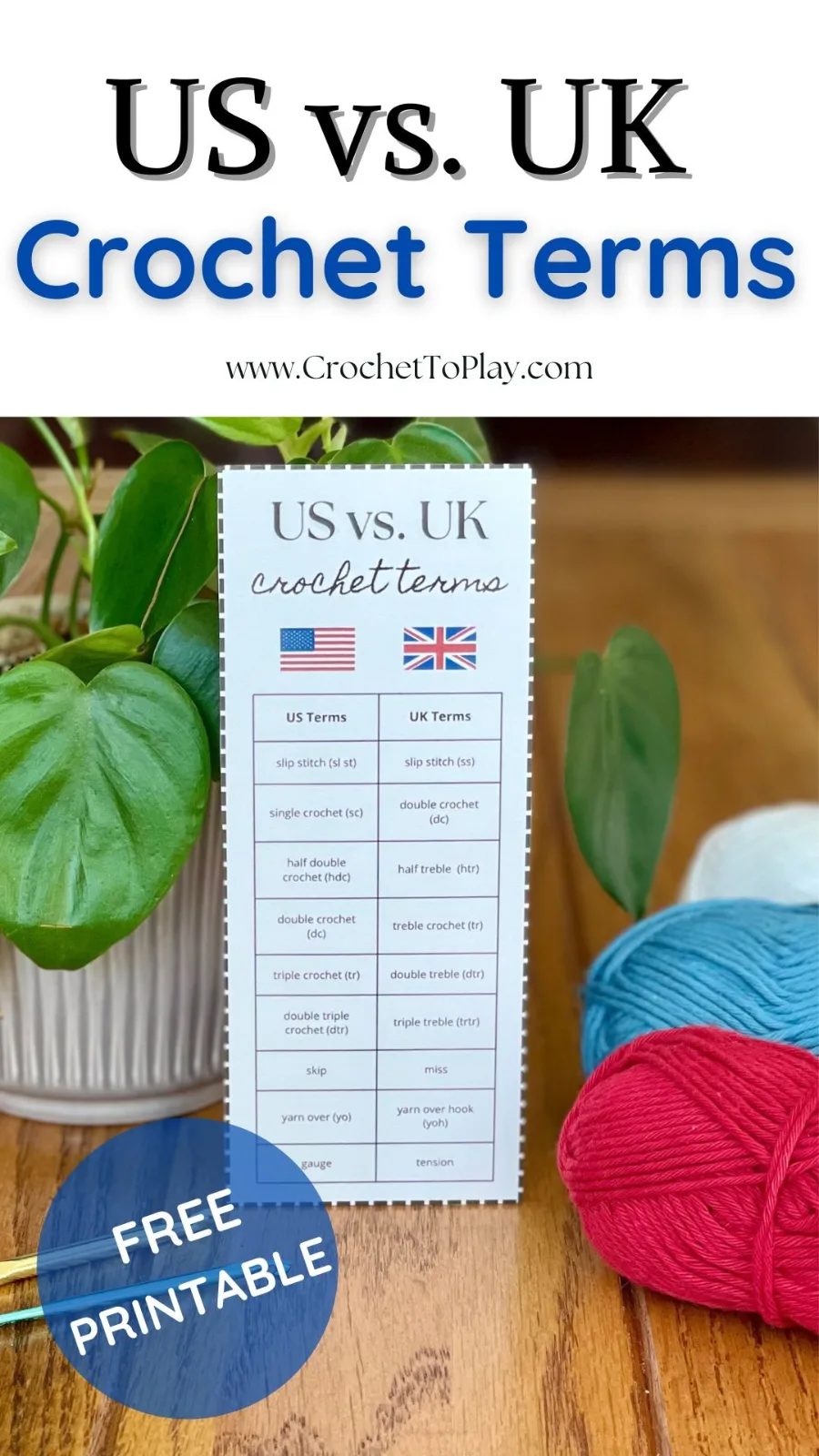
How to Read a Crochet Pattern: US vs UK Terms Made Simple
Crochet Hook Sizes: The Complete Chart (mm, US and UK)
Leave a comment