How to Read a Crochet Pattern: US vs UK Terms Made Simple
Brackets, asterisks, stitch counts, turning chains and the US/UK trap that makes a pattern come out the wrong size — decoded with real examples.
Pattern at a glance
US terms- Skill level
- Beginner
- Time
- 6 minute read
- Rating
In this post
- The quick answer: US vs UK terms
- The punctuation, decoded
- Brackets ( ) and [ ]
- Asterisks *
- The number at the end of a row
- Stitches worked into the same place
- Turning chains
- Reading a real round
- Rounds vs rows, and why it matters
- Gauge: the part people skip
- Common abbreviations
- Common questions
- How do I know if a pattern is US or UK?
- What happens if I use UK terms on a US pattern?
- Do I have to make a gauge swatch?
- What does "work even" mean?
A crochet pattern is written in shorthand so it fits on a page. Once you can read the shorthand, any pattern in the world opens up — including the trap that catches most new crocheters: the same words mean different stitches in the US and the UK.
The quick answer: US vs UK terms
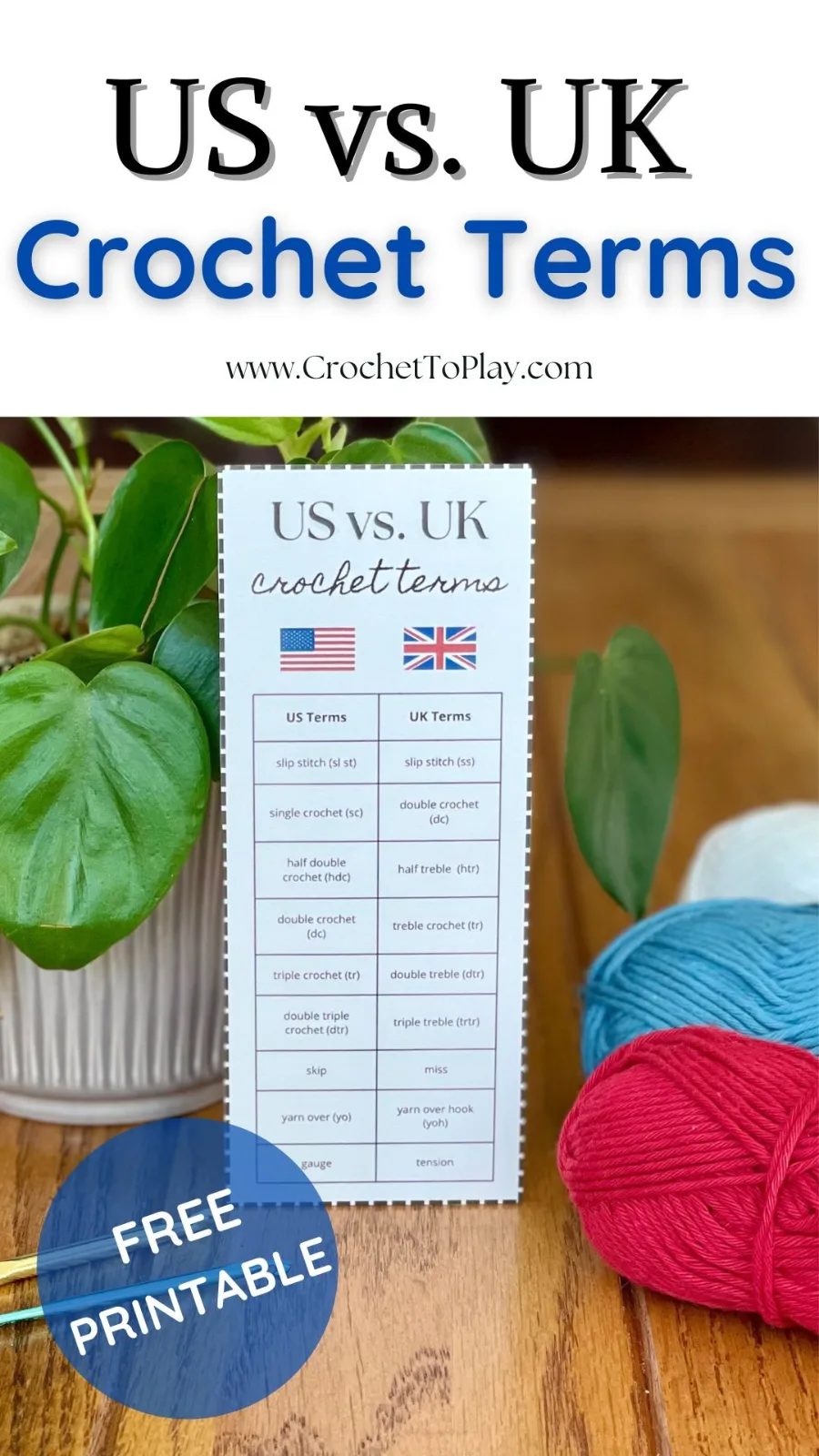
In UK patterns every stitch name is "one taller" than the US name for the same stitch.
| US term | UK term |
|---|---|
| single crochet (sc) | double crochet (dc) |
| half double crochet (hdc) | half treble crochet (htr) |
| double crochet (dc) | treble crochet (tr) |
| treble crochet (tr) | double treble (dtr) |
| slip stitch (sl st) | slip stitch (ss) |
How to tell which you're reading: if the pattern uses the term "single crochet" anywhere, it's US. If the shortest stitch it ever mentions is "double crochet", it's UK. Every YarnBloom pattern is written in US terms and says so on the pattern card.
The rest of this post is just below — free, as always.
The punctuation, decoded
Brackets ( ) and [ ]
A group of stitches to repeat, with the number of repeats after it.
(Sc 1, inc) 6 times means: single crochet in the next stitch, then 2 sc in the stitch after that — and do that whole pair six times. That round turns 12 stitches into 18.
Asterisks *
The same idea over a longer run. *Sc 3, dec* repeat around means repeat everything between the asterisks until you reach the end of the round.
The number at the end of a row
(18) at the end of a round is the stitch count — how many stitches you should have when that round is finished. It is the single most useful thing in a pattern. Count against it every round; catching a mistake one round later costs seconds, catching it ten rounds later costs an evening.
Stitches worked into the same place
2 dc in next st means both stitches go into one stitch — that's an increase. Dc2tog means two stitches worked together into one — a decrease.
Turning chains
The chain at the start of a row that brings your yarn up to the height of the stitches you're about to make: ch 1 for sc, ch 2 for hdc, ch 3 for dc. The important question is whether it counts as a stitch. Patterns must tell you; ours always do, and on YarnBloom the turning chain never counts unless stated.
Reading a real round
Here's a line from our crochet ball pattern:
Rnd 4: (Sc 2, inc) 6 times. (24)
Translated: work one single crochet into each of the next two stitches, then two single crochets into the next stitch. Do that three-stitch sequence six times. You started the round with 18 stitches and you end it with 24.
Rounds vs rows, and why it matters
- Rows are flat: you turn your work at the end of each one. Blankets, scarves and rectangles.
- Joined rounds close with a slip stitch into the first stitch — used for hats and granny squares. They leave a visible seam line.
- Continuous rounds (a spiral) never join: you keep going around and a stitch marker tracks where each round began. Nearly all amigurumi works this way, so there's no seam.
Gauge: the part people skip
Gauge is how many stitches and rows fit in 4 in (10 cm). It only matters when size matters — a sweater, a hat, anything that must fit. Crochet a 5 in square in the pattern's stitch, measure the middle, and if you have too many stitches go up a hook size; too few, go down. For a toy, a bag or a blanket, you can safely ignore it.
Common abbreviations
- ch chain · sl st slip stitch · st(s) stitch(es)
- sc, hdc, dc, tr single, half double, double, treble crochet
- inc increase (2 stitches in one) · dec decrease (2 worked together)
- BLO / FLO back loop only / front loop only
- sp space · rep repeat · rnd round · RS / WS right side / wrong side
- FO fasten off · MR magic ring (see how to make one)
Common questions
How do I know if a pattern is US or UK?
Good patterns state it near the top. If not: the presence of "single crochet" means US; a pattern whose smallest stitch is "double crochet" is UK. Designer location is a strong hint too.
What happens if I use UK terms on a US pattern?
Every stitch comes out taller than intended, so the piece grows — a hat becomes a bucket. The stitch counts still work, which is why the mistake often isn't spotted until the end.
Do I have to make a gauge swatch?
Only for items that need to fit: garments, hats, gloves. For toys, bags, blankets and decorations, work to the pattern and enjoy whatever size you get.
What does "work even" mean?
Crochet one stitch in each stitch around, with no increases or decreases, so the count stays the same.
Pattern shorthand stops looking like code after about three projects. Start with your first four stitches if you haven't yet. 📖
Did you make this?
Tap a star to rate this pattern — it helps other makers find it.
Rated 5.0 by 1 maker
YarnBloom
Crochet patterns & tutorials
YarnBloom shares cozy, beginner-friendly crochet patterns written in clear US terms, with a stitch count on every round and tips for the tricky bits. Grab your hook — let’s make something lovely.
You might also love
Crochet Hook Sizes: The Complete Chart (mm, US and UK)
How to Crochet for Beginners: Your First Four Stitches
Leave a comment